
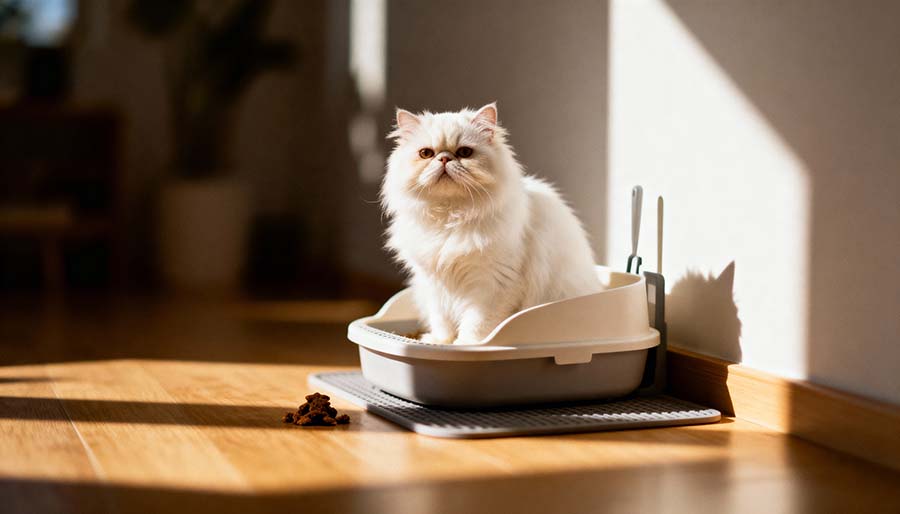
Cats and Litter Box Avoidance
Finding urine on a rug or stool beside the litter box can be frustrating and worrying. You may wonder whether your cat dislikes the litter, feels stressed, or has a health problem. Litter box avoidance, often called house-soiling, can have several overlapping causes.
Your cat is not trying to punish you. These changes often mean that something about their health, comfort, or surroundings needs attention. With veterinary guidance and thoughtful adjustments at home, many cats can return to comfortable, consistent litter box use.
Recognizing the Signs
The most obvious sign is urine or stool outside the box, but watch for subtler changes. Your cat may hesitate before entering, balance on the edges, leave quickly, or repeatedly choose beds, laundry, or rugs.
Other signs include frequent trips to the box, small urine clumps, straining, crying, blood in the urine, or increased licking around the genitals. Hard, dry stool or loose stool may point to a digestive problem. Changes in appetite, thirst, activity, or willingness to climb stairs also matter.
Urine spraying differs from emptying the bladder. A spraying cat often stands with a raised, quivering tail and deposits a small amount of urine on a vertical surface. Spraying may reflect stress or marking behavior, but medical problems still need consideration.
Possible Medical Causes
Painful bladder inflammation, urinary stones, and urinary tract infections can cause house-soiling. Feline idiopathic cystitis is a painful bladder condition without an identifiable underlying cause; stress can contribute to flare-ups. Urinary symptoms do not automatically mean an infection, and antibiotics are not appropriate for every cat.
Kidney disease and diabetes may increase thirst and urine production, making accidents more likely. Arthritis can make stepping over high sides, squatting, or reaching a downstairs box painful. Constipation, diarrhea, and other intestinal problems may cause urgency or discomfort. A cat that experiences pain while eliminating can begin associating the box with that pain, even after the original condition improves.
Because cats often hide illness, appearing otherwise normal does not rule out a medical cause.
Environmental and Behavioral Causes
A dirty box, strongly scented litter, unfamiliar texture, or cramped space can discourage use. Covered boxes suit some cats, while others dislike trapped odors or limited visibility. Sudden changes in litter or box location may also disrupt established habits.
Stress deserves equal attention. Moving, visitors, renovations, a new baby, or another pet can affect a cat’s sense of security. In homes with multiple cats, one cat may block access or ambush another near the box. A noisy washing machine or persistent dog can make an otherwise convenient location feel unsafe.
Practical Solutions to Try at Home
Provide enough boxes. Start with one box per cat, plus one extra. Place them in separate locations rather than lining them up together. In multilevel homes, offer a box on each floor your cat regularly uses.
Make access comfortable. Choose a roomy box that allows easy turning and digging. Offer a low entrance for older cats or cats with mobility problems. Place boxes in quiet, accessible areas away from food and water, with a clear escape route.
Offer litter choices. Many cats prefer fine-textured, unscented clumping litter. If you suspect a preference problem, offer an additional box with a different litter while keeping the familiar option available. Avoid changing every box at once.
Keep things clean. Scoop waste at least daily, and more often when needed. Regularly empty and wash boxes with mild soap and water, rinse thoroughly, and dry before refilling. Replace boxes that retain odors or have damaged surfaces.
Clean accidents thoroughly. Use an enzymatic cleaner designed for pet urine, following the label instructions. Avoid ammonia-based products, which can smell like urine to cats. Temporarily placing an extra box where accidents occur may encourage your cat to use a box again.
Reduce stress. Maintain predictable routines and provide hiding places, resting spots, scratching surfaces, and daily play. Give cats separate feeding and resting areas if tension exists. Your veterinarian may suggest a feline pheromone product as an additional aid.
Avoid punishment. Scolding, spraying water, or rubbing your cat’s nose in an accident can increase fear and worsen the problem. Never force your cat to remain in the box.
When Should You Visit the Veterinarian?
Contact your veterinarian when house-soiling first appears, especially if the change is sudden. You can improve the litter box setup while arranging an appointment, but do not wait for home solutions to fail before considering illness.
Seek emergency care immediately if your cat repeatedly strains but passes little or no urine. A urinary blockage can become life-threatening, particularly in male cats. Crying, vomiting, weakness, or increasing distress add urgency. Straining to urinate can resemble constipation; if you cannot tell which is happening, seek veterinary help immediately.
Blood in the urine, painful urination, repeated small urinations, or marked changes in appetite or energy warrant prompt veterinary contact. Persistent diarrhea, difficulty passing stool, increased thirst, and weight loss also need assessment.
If your veterinarian has ruled out medical problems and recommended home changes, arrange follow-up when accidents continue, worsen, or return. Agree on a review timeline rather than repeatedly switching products without guidance. Record accident locations, urine and stool appearance, litter preferences, and recent household changes to help identify patterns.
Treatment Depends on the Cause
Your veterinarian may recommend urine testing, bloodwork, stool testing, or imaging based on your cat’s symptoms and examination. Treatment might include pain relief, constipation management, treatment of confirmed infection, or a prescribed diet for certain urinary conditions. Never give human pain medicines or leftover antibiotics.
Cats with bladder inflammation often need both medical care and environmental changes. Persistent anxiety or conflict may require a structured behavior plan, prescribed medication, or referral to a veterinary behaviorist.
Litter box avoidance can test your patience, but it is a problem you and your veterinary team can address together. Recognizing discomfort early, making the box inviting, and responding calmly give your cat the best opportunity to feel safe and comfortable again.